Introducing ROS Programming
While working on HyperRail, (Gantry Robot that measures plant data via spectral analysis) I am learning how to utilize ROS. ‘Robot Operating System’ (ROS) and is many software libraries and tools that help you build robot application. These packages consist of topics and services. Topics and services allow for ROS nodes to send messages and data to each other. Not to get to into detail, but services are a many to many relationship while Topics are a one to one. Within each node there are many services that can be used to send and receive messages. These ROS nodes are effective for breaking up large systems into separate modules.
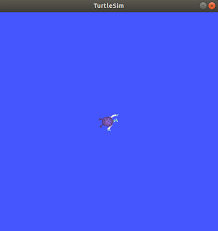
Even though, I have just started breaking the surface of the packages, I have seen the power that ROS packages have. There are many packages like rviz and rqt that help visualize the structure of a system with many nodes. One specific tutorial that I guess is pretty standard for learning about ROS, is using the turtlesim package. In this turtlesim, the use is a able to launch a gui with a turtle and control the turtle with arrow keys. At the same time, another service can be activated that sends a message to show the positional data that is being logged. I think this is one of the best tutorials that is demonstrated on the ROS wiki page. This is because it gives a great interactive experienve and uses many nodes at once. The packages can also be connect to a web app via a websocket. Many of the web app tools can be found at http://robotwebtools.org/.
Welcome to blogs.oregonstate.edu. This is your first post. Edit or delete it, then start blogging!

Hi, this is a comment.
To get started with moderating, editing, and deleting comments, please visit the Comments screen in the dashboard.
Commenter avatars come from Gravatar.