I am pleased to share the 2025 Annual Report of Oregon State University’s BioResource Research (BRR) Program.
This past year, we welcomed 13 new students into the major, bringing the total number of BRR majors to 48, including 18 double majors. In 2025, BRR students conducted over 4,000 hours of research in the laboratories of mentors from 7 OSU Colleges.
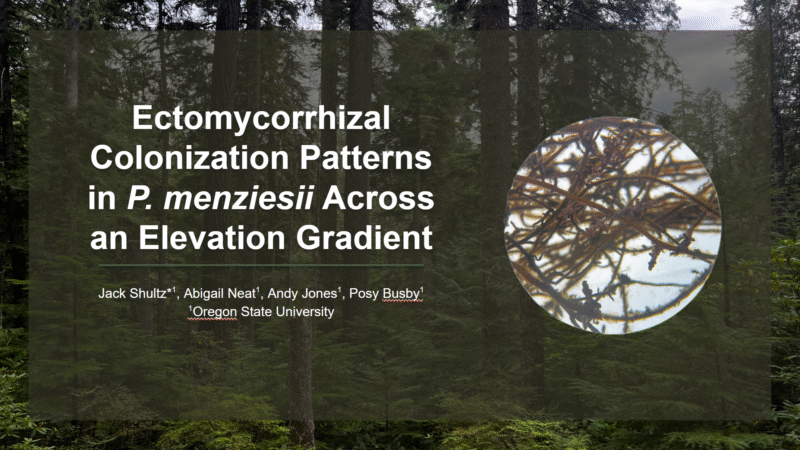
Five students graduated and 7 successfully presented and defended their BRR thesis, as a capstone event of their undergraduate career.
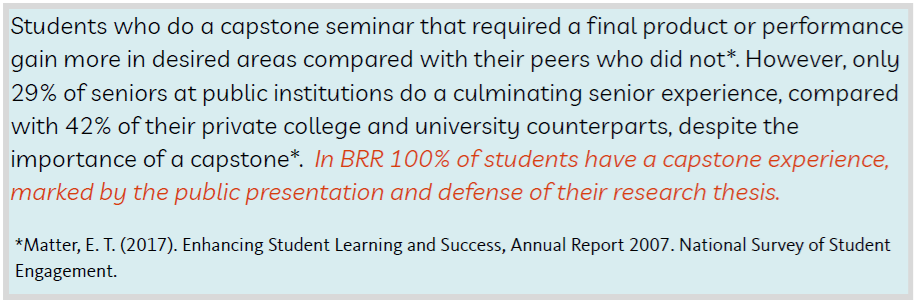
BRR students and faculty won a total of 24 awards over the past year. We also maintain a higher 6-year graduation rate than the College and University, and surpass OSU’s target benchmark of an 80%, in the 2024-2030 strategic plan, “Prosperity Widely Shared”.
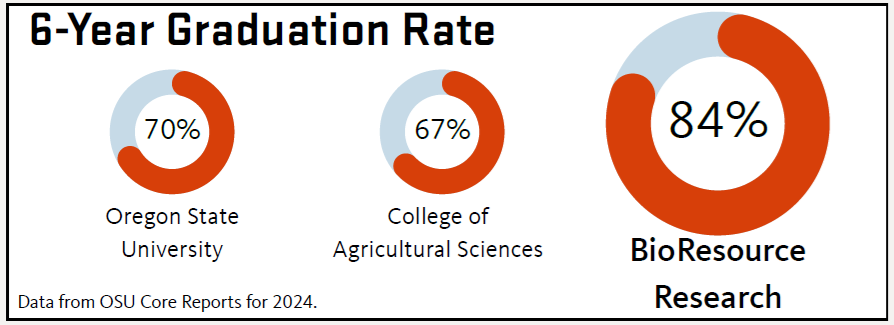
The success of BRR students is partially do the many evidence-based high impact educational practices that are built into the major, including:
- Capstone Courses and Projects: BRR students write, present, and defend their thesis
- Collaborative Assignments and Projects: team-based assignments in BRR 200 and 406
- Learning Communities: BRR upperclass students mentor incoming students, in a combined BRR 100 / BRR 409 course. BRR 406 students share their research with BRR 200 students, in an annual research poster session.
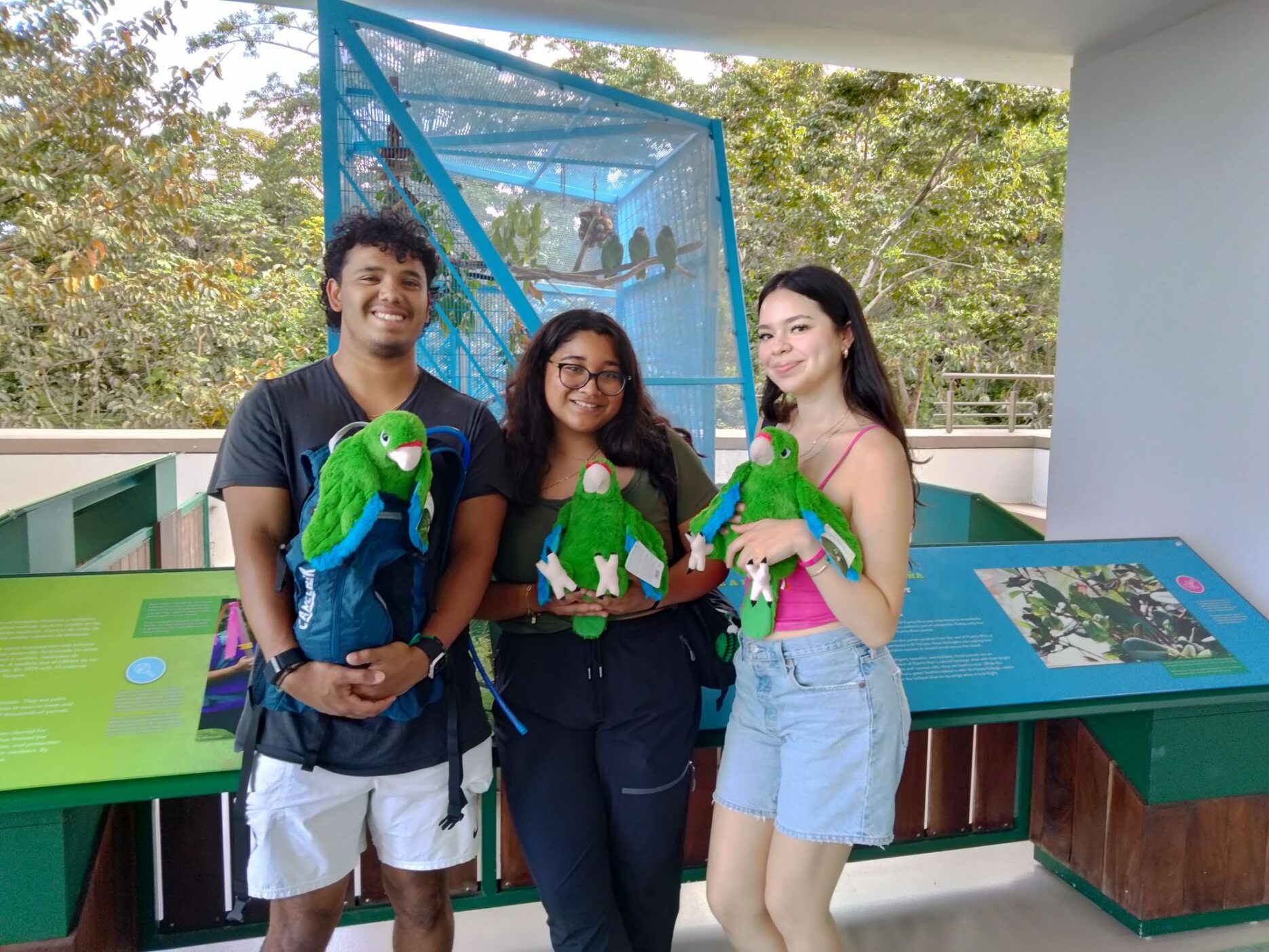
- Global- Service-, and Community-Based Learning: opportunity to take the study abroad, service-learning course BRR 399, “Island Resilience: Exploring Health, Sustainability, & Food Security in Puerto Rico”
- Undergraduate Research: BRR students complete between 420 to 700 hours of research, in advance of writing and defending their thesis.
- Writing-Intensive Courses: BRR students complete three major writing assignments: a project proposal, progress report, and undergraduate thesis
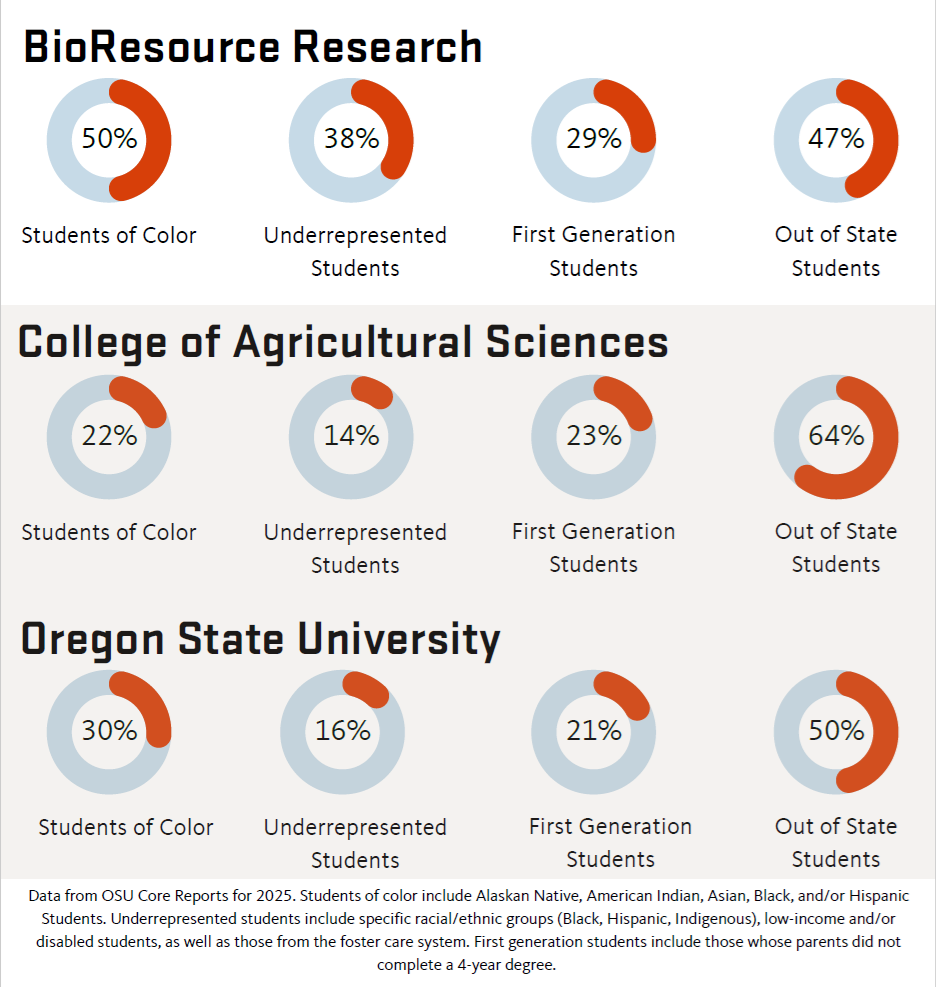
The success of BRR is also due to the students, themselves: a remarkable group of scholars and scientists, who come from many different backgrounds, and bring diverse perspectives and experiences to their work.
We hope that you will take time to browse the full report, and share your ideas and experiences, as they relate to the BRR program at OSU.