Intro
Located in Central Oregon’s high desert, Bend has transitioned from a historically resource-based economy to one driven largely by tourism and outdoor recreation. The tourism industry has generated substantial economic benefits, including job creation, business growth, and an increase in Bend’s popularity within Oregon. However, it has also had impacts on the community, creating other challenges, namely in the economic, environmental, and socio-cultural sectors. This blog aims to discuss a few of the major impacts of tourism in these areas and propose some potential solutions for them. You, the reader, are invited to participate in the conversation about these ideas and how they resonate with your understanding of these issues.
Framework
The sustainable tourism framework is based on the principles of tourism that mitigate environmental impacts on the destination, and uses the opportunities provided by tourism to educate visitors about the destination, as well as support the destination in order to maintain it for future generations. In the community-based model of sustainable tourism, there is a heavy focus on partnership with the resident community in order to operate and maintain the destination, and inclusion of the community in decision-making. This is done with the goals in mind of environmental sustainability, where the ecological processes and natural resources are supported, economic sustainability, where the economy is stimulated and allowed to grow in a way that benefits the community, and sociocultural sustainability, where culture and community are preserved and empowered. (Zielinski et al, 2020) In this post, we discuss how Bend and Central Oregon, more broadly, are struggling to meet these goals.
Environmental Impact
Environmental degradation is one of the biggest environmental impact concerns of tourism in Bend and the Central Oregon area. This includes trail degradation and habitat disturbance from increased foot traffic. (Hillenbrand) This is especially a concern in popular hiking and climbing areas where increased tourist activity poses a threat to sensitive habitats, erodes soil, and more. This is mainly due to increased foot traffic on trails causing them to widen, and people hiking off trails and outside of designated areas. This increased tourist activity has even led managers in some popular destinations in Central Oregon to implement a permit system to reduce foot traffic. (Johnson, 2022) This behavior results in reduced quality and quantity of habitat for wildlife, and diminishes the scenery and resource availability for residents.
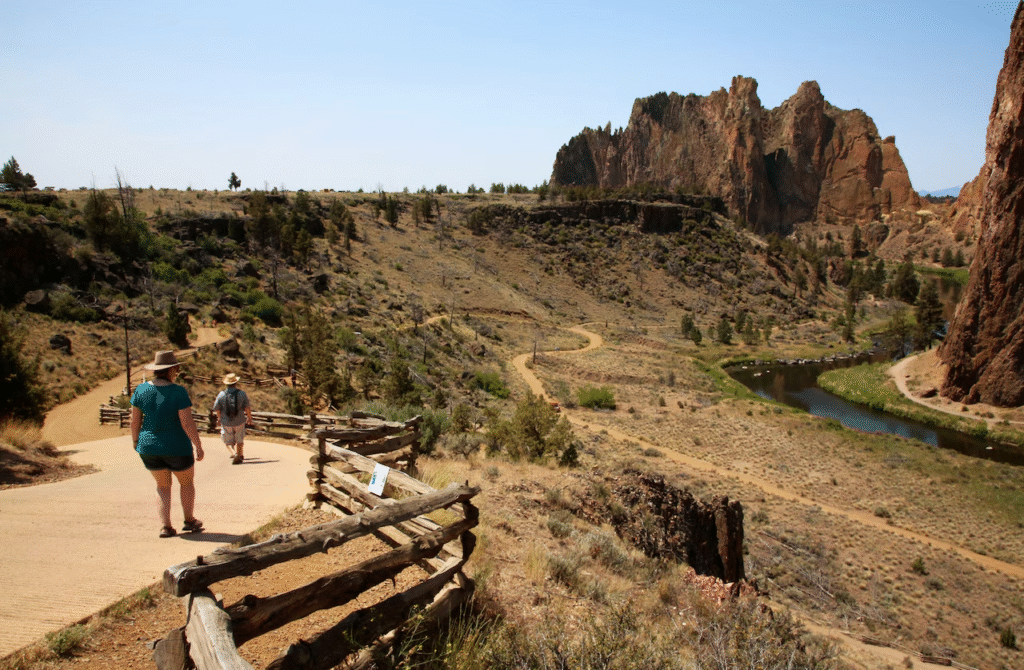
Hiking trails at Smith Rock State Park (Hale, 2018)
Another impact of tourism is increased waste and litter left in natural areas. Residents have noticed an increase in litter left behind in popular tourist locations, as well as on roads and in public areas. Tourists are often unaware or apathetic about their personal trash management, and an increase in tourists means an increase in those littering. (Nelson, 2021) Another possible factor is inadequate capacity for trash disposal at tourist destinations. Litter is unsightly in tourist destinations, and it negatively affects wildlife that may consume the trash and become ill.
Interactions with and disturbance of wildlife is another negative impact of increased tourism in the Bend area. Deer and elk populations, especially, have been impacted by human activity in Central Oregon, including tourism and recreation. The stretch of Highway 20 between Bend and Suttle Lake alone sees 350-600 vehicle collisions with mule deer and elk a year. (ODFW) This is one contributing factor in a nearly 60% decline in the mule deer population in Central Oregon in the last 20 years. Other factors include habitat loss due to the expansion of tourism-driven cities and increased human presence in their habitat, causing disruption to their lifestyle and natural behaviors. (Cornelious, 2021)
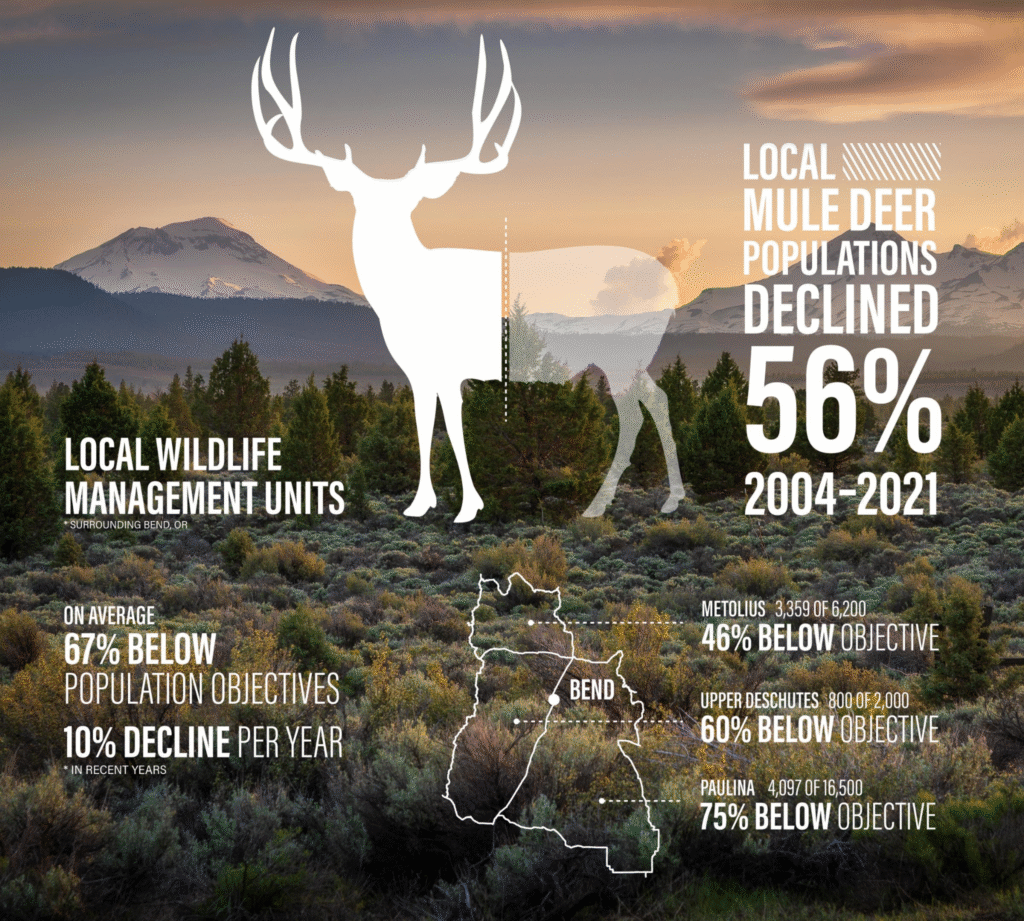
Sections of the Deschutes National Forest have begun to implement winter closures to minimize human disturbance of declining mule deer population. (USDA, 2025)
Economic Impact
Bend and the larger Central Oregon region have seen a significant rise in tourism over the past twenty years, particularly driven by the area’s outdoor recreation. Bend’s proximity to Mount Bachelor has primarily attracted mountain bikers and skiers alike, depending on the season and snow conditions, which have historically been very favorable. However, this surge in tourism has led to several adverse economic impacts. Primarily due to the seasonal nature of the local outdoor recreation industry, many tourism-related economic benefits are subject to fluctuations, leading to economic uncertainty for seasonal employees and local businesses that rely on consistent patronage. Additionally, as the tourism industry grows, many of the new job opportunities created tend to be low-paying, which results in a strained workforce that struggles to meet basic living expenses. This problem, coupled with rising housing costs due to an increase in tourists seeking short-term accommodations and buying vacation homes, paints a worrisome picture of Bend’s future in which locals can no longer afford to live where they once could.
“The industry is a victim of its own success, contributing to an affordable housing shortage, crowds and contributing to a large class of the region’s lowest paid workers.” (Roig, 2024)
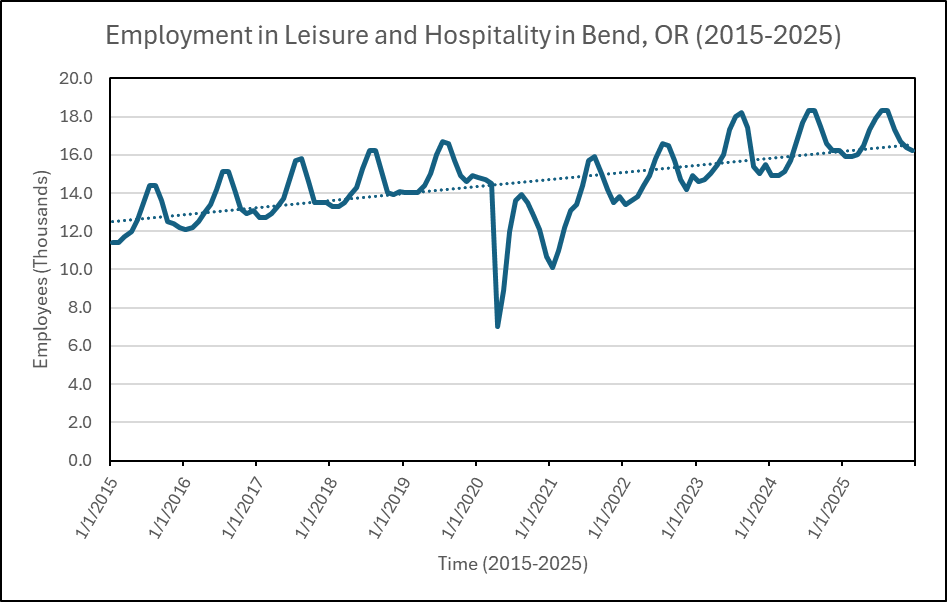
Employment in Leisure and Hospitality in Bend, OR, from 2015 to 2025 (USBLS, 2026)
Above is a graph of the employment rates in the “Leisure and Hospitality” sector (which includes much of the work related to the tourism industry) in Bend from 2015 to 2025. This figure demonstrates the seasonality of the job market and the industry’s increasing employment rate over the years, with an exception around 2020, which shows an expected drop due to the pandemic that occurred around that time.
Socio-cultural Impact
A major cultural impact of tourism in Central Oregon is on tribal lands and culture, specifically of the Confederated Tribes of Warm Springs, whose homelands cover much of Central Oregon. Tourism development has posed a threat to the cultural way of life of tribal members. One example is a resort project near Redmond, which has been highly contested for years due to the expected water and resource demand that threatens the tribes’ rights to fishing and other land use in the area. This resort has been planned as a response to increased demand for tourism amenities, but the expected water usage will put more strain on an aquifer that’s already being depleted, and will likely significantly impact the availability of natural resources that are important to the way of life of the Indigenous people. (Cook, 2025)
Another impact on the community of Bend is the rapid growth in population in recent years due to tourism attracting people to move in, which puts strain on the infrastructure, housing prices, and community, which detracts from the quality of life of residents. This is referred to as an amenity trap, where people are drawn in by the amenities a destination has to offer, and the quality of life is subsequently reduced for residents as more move in. This contributes to increasing resentment of tourism by the local community. (Lawson, 2024)
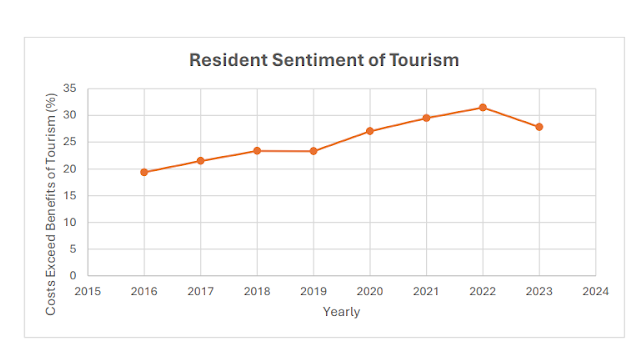
Globally, resident sentiments of tourism have been increasingly trending towards costs exceeding the benefits. (Montgomery, 2025)
Part of Bend becoming an amenity trap is the increase in housing costs and decrease in affordable options for residents. Many housing options in Bend are owned by rental companies, as vacation homes, and by retirees. (Burdick, 2023) This reduces affordable, long-term housing options for residents, especially families. (Martínez, 2025) Residents are often displaced by this increased cost of housing, which then reduces the workforce needed for industry growth. (Anderson et al, 2017)
Solutions
As discussed earlier, a major impact of tourism is the neglect and damage caused to the local environment by the rapid expansion of housing development, as well as the increasing abundance of human activity taking place in the forests and other natural areas that used to remain as safe spaces for wildlife. These activities cause stress and harm to the places where wild animals reside and feel comfortable, which can eventually lead to endangering species and permanently deteriorating local natural habitats. Some solutions to these issues include wildlife tunnels and passageways that safely allow animals to cross busy roads, and exclusion zones/protected areas within forests to ensure human activity is kept separate from wildlife habitats.
In terms of the economic impacts outlined above, the city of Bend could develop and promote more year-round events in an effort to flatten the highs and lows of the seasonal impacts on its workers. This would provide professionals in the tourism industry with more stable and reliable income, year-round. Another option would be regulating the industry to enforce a higher quality of work, such as by providing better benefits, pay, or tax benefits for those in the sector.
Finally, from a socio-cultural perspective, involving the local indigenous communities in decisions and policy-making processes would help to alleviate tensions and ensure that they receive access to the resources they need to function as a community. Additionally, placing regulations on the ongoing housing development to increase the affordability of long-term housing for permanent residents of Bend would allow those negatively affected by the fluctuations and seasonality of their work to have a more stable situation, and in turn, contribute to building a more cohesive and resilient community.
Questions to the community
If you are familiar with the Central Oregon area, what other impacts have you noticed?
How do you see these issues impacting other tourism destinations?
What solutions do you think could be implemented in Bend?
References:
Anderson, S., Eagan, C., Foote, E., Gammond, K., Gustafson, K., Johnson, A., Livingston, J., Schueler, K., Wall, G., & Sparks, K. (2017, February). Landscape report bend 2030 February 2017 prepared for: Bend 2030 report. https://bendoregon.gov/wp-content/uploads/2025/12/Landscape-Report-Bend-2030.pdf
Bend to Suttle Lake Wildlife Crossing Initiative. Oregon Department of Fish and Wildlife. (n.d.). https://www.dfw.state.or.us/conservationstrategy/OCRF/projects/2025-8/Bend_to_Suttle_Lake_Wildlife_Crossing_Initiative.html#:~:text=The%20Oregon%20Wildlife%20Foundation%2C%20on,Highway%2020%20on%20USFS%20land.
Burdick, M. (2023, April 28). Oregon communities continue grappling with tourism impacts. Association of Oregon Counties. https://oregoncounties.org/oregon-communities-continue-grappling-with-tourism-impacts/
Cook, E. C. (2025, April 17). Deschutes County snubs warm springs tribes in Thornburgh Resort appeal. opb. https://www.opb.org/article/2025/04/17/deschutes-county-snubs-warm-springs-tribes-in-thornburgh-resort-appeal/
Cornelius, J. (2021, December 14). Mule deer in steep decline in sisters country. The Nugget Newspaper. https://www.nuggetnews.com/story/2021/12/14/news/mule-deer-in-steep-decline-in-sisters-country/32689.html#:~:text=Mortality%20on%20the%20highways%20is,re%20naturally%20evolved%20to%20do.%E2%80%9D
Hillenbrand, Y. (n.d.). The interplay between tourism and nature preservation in Central Oregon. centraloregonwildandscenic.org. https://www.centraloregonwildandscenic.org/the-interplay-between-tourism-and-nature-preservation-in-central-oregon
Johnson, S. (2022, August 15). Balancing overuse in central Oregon’s outdoor spaces. Bend Magazine. https://bendmagazine.com/balancing-overuse-in-central-oregons-outdoor-spaces/
Lawson, M. (2024, September). Tackling the amenity trap in Bend, Oregon. Headwaters Economic. https://headwaterseconomics.org/wp-content/uploads/2024/11/2024HE-BendOR-Amenity-Report-R4.pdf
Martinez, K. S. (2025, October 10). City Housing and economic reports show yawning inequality in bend. Oregon Public Broadcasting. https://www.opb.org/article/2025/10/09/bend-housing-inequality-report/
Nelson, N. (2021, May 16). As Trash Piles Up and Trails Wear Down, Here’s How We Can All Help Keep Bend Green. Bend Magazine. https://bendmagazine.com/keep-bend-clean-and-green/
Zielinski, S., Jeong, Y., & Milanés, C. B. (2020). Factors that influence community-based tourism (CBT) in developing and developed countries. Tourism Geographies, 23(5–6), 1040–1072. https://doi.org/10.1080/14616688.2020.1786156
Roig, S. (2024, July 27). Central Oregon tourism drives economy, but not without negatives. The Bulletin. https://bendbulletin.com/2024/07/27/central-oregon-tourism-drives-economy-but-not-without-negatives/
USBLS. (2026). Bend, or economy at a glance. U.S. Bureau of Labor Statistics. https://www.bls.gov/eag/eag.or_bend_msa.htm#eag_or_bend_msa.f.4
Image sources:
Deschutes National Forest | Winter Range closures | Forest Service. USDA. (2025, November 21). https://www.fs.usda.gov/r06/deschutes/newsroom/stories/winter-range-closures
Hale, J. (2018, July 8). Smith Rock is the pinnacle of Oregon’s state parks – oregonlive.com. OregonLive. https://www.oregonlive.com/life_and_culture/erry-2018/07/bdeb85bc459802/smith_rock_is_the_gorgeous_pin.html
Montgomery, T. (2025, December 11). Evaluating Economic Policy Responses to Appease Growing Dissent in Tourism. https://juneau.org/wp-content/uploads/2026/02/Evaluating-Economic-Policy-Responses-to-Appease-Growing-Dissent-in-Tourism-Montgomery-Dec-2025.pdf