Categories
Uncategorized

From Self-Assessment to Action

Hudson Chase November 28, 2025

After completing the Life Stress Inventory, Coping and Stress Management Skills Test, and Type A Personality Survey, I gained meaningful insight into how I respond to stress and how I can better manage it as I move forward in my professional career. My Life Stress score was 150, which falls within the “normal” range. This suggests that while I have experienced a fair amount of change, I am not at unusually high risk for stress related issues. Still, the other assessments helped me understand how I tend to cope with stress when it does arise.

My Problem Focused Coping score of 70 indicates that I naturally try to solve or take control of stressors. This approach is useful when a situation can be changed, but it also reminded me that not all stressors are fixable. In those moments, I need to lean more on emotional or acceptance based strategies instead of pushing myself to fix what cannot be fixed.

The Type A Personality Survey showed an Impatience Irritability score of 35, meaning I generally interact with others with warmth and tolerance, but mild impatience may surface under pressure. While this score is not alarming, it reminds me that frustration can build during fast paced or demanding periods, and becoming aware of those moments will help prevent miscommunication or unnecessary tension.

Looking ahead in my career, I plan to practice habits that lower stress before it escalates, such as setting boundaries, taking breaks without guilt, and recognizing when I need support instead of pushing through alone.

Many organizations today also recognize the impact of stress on performance and health. Companies are increasingly offering mental health resources, flexible work arrangements, wellness programs, and stress management training. Some even provide access to counseling, mindfulness workshops, or apps that track well being. These initiatives not only help employees stay healthy but also foster more supportive and sustainable workplaces.

Understanding my stress profile has encouraged me to be more intentional in caring for my well being for both personal growth and future professional success.

Categories
Uncategorized

Employee Onboarding, Training, and Development – For What It’s Worth

Hudson Chase November 9, 2025

During my two internships with the general contracting company Fortis, I participated in two onboarding sessions and six months of intern training. Each onboarding week introduced new hires to company culture, safety expectations, and project goals, while the ongoing intern sessions connected us with experienced industry professionals. These programs were engaging and built a sense of belonging, as we compared workloads, shared challenges, and collaborated. This experience demonstrated how effective onboarding makes employees feel valued and supported from the start, promoting motivation and connection to the organization’s mission. Successful onboarding helps new hires internalize company values and adapt to job demands through stages of anticipation, encounter, and understanding.

One of the most beneficial parts of Fortis’s training was the mix of hands on learning and continuous support. Software training in RS Means and hazardous materials handling applied the principles of meaningful and relevant training. The company also encouraged independent learning through LinkedIn Learning subscriptions, allowing interns to build skills at their own pace. This aligns with the idea that effective onboarding and training extend beyond the first few days and should continue through structured follow ups and mentorship.

Overall, the Fortis onboarding and training program was an effective blend of socialization, hands on practice, and personal development, showing how well designed experiences can shape a successful transition into the professional world.

Categories
Uncategorized

The Difference Between Effective and Ineffective Interviews

Hudson Chase

I have participated in quite a few formal interviews, some that worked well and others that did not. The best ones were structured and focused on the actual job. The interviewer had a clear plan, asked every participant the same set of questions, and took notes to compare answers. This kind of interview felt fair and helped show who could actually perform the work and revealed how much experience I truly have. Others felt like a conversation with loose questions on printer paper that interviewer lean on whenever they choose.Structured interviews increase reliability, meaning consistent results, and validity, meaning the interview measures what matters for the job. When interviews are based on the job description and have clear scoring benchmarks, they produce better hiring decisions that are worth the time and cost.

On the other hand, I have also been in interviews that felt disorganized or overly casual. In one case, the interviewer mostly talked about themselves and asked only a few random questions. These unstructured interviews often rely too much on first impressions or gut feelings, which reduces fairness and accuracy. Rebecca Knight highlights in 7 Practical Ways to Reduce Bias in Your Hiring Process that standardizing interviews and using scoring guides can reduce bias and improve objectivity.

If I could advise those employers, I would tell them to standardize their process by asking the same behavioral or situational questions to each applicant and rating responses using a consistent scale. They should train interviewers to recognize bias, take structured notes, and score answers immediately after the interview. Adding short work sample tests could also make the process more valid since it shows how candidates would actually perform. As Knight explains, work sample tests and structured formats are stronger predictors of future job success and help make hiring both fairer and more accurate.

Overall, the key to an effective interview is preparation, structure, and awareness. When interviews are built around job related competencies and evaluated with clear criteria, they help select the best candidate while promoting fairness and diversity in the workplace.

Resources:

Knight, R. (2018) 7 Practical Ways to Reduce Bias in Your Hiring Processes, Society for Human Resources Management.

Chamorro-Premuzic, T., & Steinmetz, C. (2013). The Perfect Hire. Scientific American Mind24 (3), 42-47

Categories
Uncategorized

How Companies Approach HR and My Future as a Manager

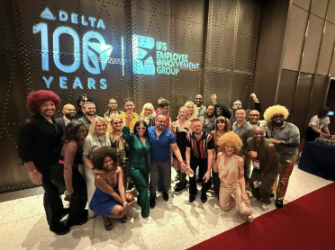
Human Resource Management is important because it helps organizations make sure employees are able to add value through their work. At Delta Air Lines, HR focuses on training and development, especially in customer service and safety, so employees have the skills needed to do their jobs well. MetLife puts more attention on keeping employees engaged by offering strong benefits and career development programs, which matches its goal of providing stability and security. PCL Construction highlights workforce planning and safety by investing in employee health, safe practices, and ongoing training to stay competitive in the construction industry. These examples show how HR practices connect to company goals while also supporting the workforce.

Image 1: Delta Employee Celebration

When I think about the kind of manager I want to be, I see myself as both an employee advocate and someone who drives positive change. This means listening to what employees need and care about, while also encouraging new practices that strengthen the organization’s culture and performance. I believe that when employees feel supported and motivated, they will be more productive and the company will succeed as a whole.

One of the hardest parts of being a manager will probably be balancing company goals with the different needs of employees. Managers have to make sure workers are trained, guided, and motivated, while also adjusting to changes in the workplace such as new technology, cultural differences, or global challenges. Finding this balance will take empathy, adaptability, and an understanding of HR practices.

Overall, I see HR as more than just an administrative task. It is a key part of how organizations grow and how people are able to succeed in their careers.

Categories
Uncategorized

Hello world!

Welcome to blogs.oregonstate.edu. This is your first post. Edit or delete it, then start blogging!